The Power IS the People
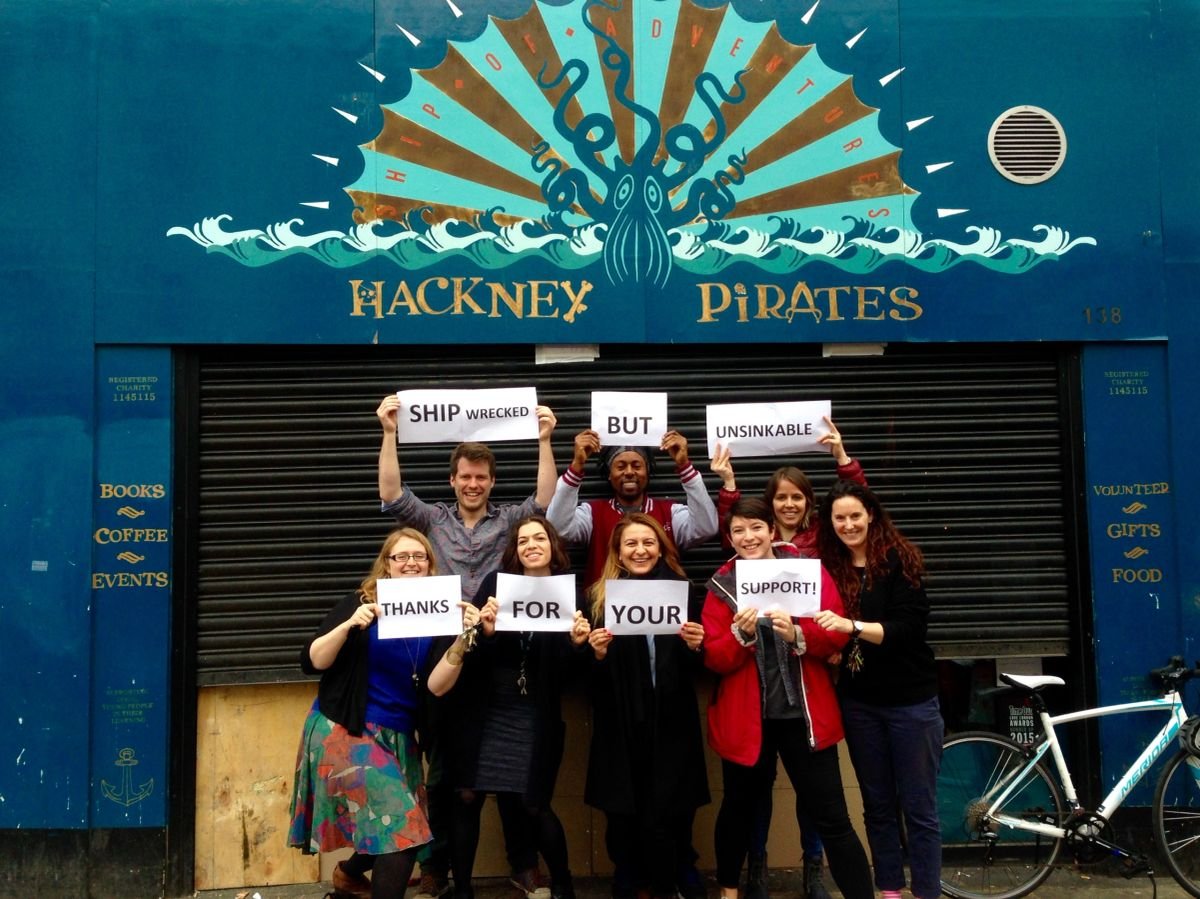
Surely a teacher who started a literacy charity must have taught English?
Actually, The Hackney Pirates (now the Literacy Pirates) started with something else. It started because I was a citizenship teacher, passionate about ensuring that all young people were able to exercise their rights and responsibilities as citizens. There are some classic ways of doing that: I planned trips to parliament, supported young people to work on issues they cared about, hosted debates, practised voting. I loved all that work.
But for some of my pupils, one of the most fundamental barriers to their active citizenship was weak literacy. This is symptomatic of an unequal education system which is failing children from poorer backgrounds. We absolutely must build a society which treats all citizens with equal value regardless of their abilities. But alongside that, we should also ensure that everyone gets an equal chance at developing the skills that make it easier or harder to access power later in life.
So that was what got me into literacy. And a key part of what The Hackney Pirates was about - and still does brilliantly - is a creative approach to developing top literacy-practice in a joyful context. Thankfully I brought in a brilliant English teacher who actually did know something about literacy to build our programme (along with a host of other contributors, volunteers and supporters), and exceptional thinking and practice about learning will always be a core part of the organisation.
But it was never just about coming up with a new technical solution. Another key part of our thinking was that when classic solutions are not enough, communities must be a part of making it better. At its core, The Hackney Pirates was a broad, thoughtful, complex collaboration between lots of different people who care. And when it comes to social change, I think there is nothing more powerful. It means you can develop solutions that no-one would come up with on their own. And being involved in that kind of collaboration can have a deep impact on those involved - both individually, and as a community of people doing something together.
What do I mean by that? I think that when we share positive new experiences and rituals with other people, we can build new versions of ourselves, and of our communities. We know countless stories of Hackney Pirates volunteers that started new career paths in education, or felt newly engaged in their local community, or who were proud to help create positive experiences of education that they didn’t have. We know teachers who found a chance to explore educational practices that were tough to fit into the school day, or who had a chance to celebrate their pupils in a fresh context that supported their in-school relationship. And of course, there are young people who we know transformed their sense of themselves as learners, seeing themselves not as underachievers, but as published authors, cinema- scriptwriters, volunteers and leaders. All of us made new connections with neighbours who we wouldn’t otherwise have known. Community organisations like The Hackney Pirates help everyone involved by rooting people together in a sense of shared place and purpose.*
Whilst I didn’t use that lens at the time, my work with the Relationships Project has led me to see that a lot of this is about re-centering the importance of relationships. It’s through diverse and rich relationships with a range of people that we live fulfilling and joyful individual lives. And it’s through those same relationships that groups of people find the power to fight collective battles around social justice and human rights. This has been known to activists and organisers since the beginning of time, and there are vast numbers of brilliant people explicitly and directly pushing this agenda in different ways.
Since leaving the Pirates, I’ve seen how many good people working towards social change insist on making crude distinctions between different kinds of activity. I hear people dismissing “service-delivery” as a nice-but-weak cousin of “campaigning”. Not to speak of the explicit disdain for “local” versus “national”. And I can give you a full-scale rant on the use of the words “at scale” as if that were a binary status. Human beings like categorising things, and like any sector, we rely on categories to decide who to support, what to fund, and how we think change is going to happen.
But I think that habit to categorise and rank social-change activities can get in the way of appreciating the messy, non-linear, multifaceted ways in which social progress is made. And at the heart of that progress is always the core question of power - who has power, what they are doing with it, and how you can change its unjust distribution.
Yes, shifting power does involve campaigning to get politicians to change laws, and it’s vital that we have a certain type of activist who is great at doing that. But there’s so much more to it. Major shifts in power involve so many mechanisms - ideas that take hold over time, consciousness-building within oppressed groups, alliance-building across difference, surprising new champions in mainstream popular culture. And especially in an era of increasing isolation, fragmentation and polarisation, one of those power-shifting mechanisms is communities that are connected to each other, that share positive and purposeful experiences, and that can build on their collective strengths to work together on issues of shared concern.
The Hackney Pirates was always fond of playing with contradictions - rigorous but also fun, school but also not, literacy but also piracy. Here’s another one which I needed some distance to recognise - it’s about the young people, but it’s also not. Yes they are the priority, the raison d’etre. But anyone who is part of a flourishing community project knows it’s so much richer than a transactional process where someone helps someone else. Being part of a flourishing community reshapes our view of ourselves, and of the world we live in. And achieving that is an essential part of change.
* These ideas lend themselves to place-based work, and indeed there’s an important trend towards re-emphasising how important neighbourhoods and local areas are to social change work. But lots of these themes - relationships, social connection and collaboration can work in a slightly different way online. I’m cheering on the current Literacy Pirates team as they work on building that community.